

How to Deploy Off-Grid Video Surveillance with 4G, 5G, or Starlink
As surveillance needs extend to remote sites, construction zones, rural properties, and other off-grid locations, traditional on-premise video systems quickly show their limitations. In environments with no wired internet and limited infrastructure, deploying a conventional NVR-based surveillance system becomes a logistical nightmare.
The Challenge With On-Premise Surveillance Systems and Wireless Data
Most traditional video surveillance setups rely on an on-site recorder (NVR or DVR), assuming a stable local network and consistent internet connectivity. In off-grid scenarios—where cellular or satellite links are the only options—this architecture falls apart:
- No local network makes connecting cameras to a NVR nearly impossible.
- Remote access to surveillance footage is unreliable or non-existent.
- Maintaining, powering, or securing on-site hardware adds complexity and cost.
100% Cloud, Hardware-Free Surveillance Is the Answer
Modern, serverless cloud video surveillance platforms eliminate the need for on-premise recording appliances. With the right setup, video streams directly from the camera to the cloud, making it possible to monitor and review footage from anywhere—even if the camera is hundreds of miles from the nearest network closet.
This approach is ideal for:
- Urban locations such as construction sites, parks, parking garages or event sites that can be served by 4G or 5G.
- More remote installations such as remote communities, industrial infrastructure, mining or other resources installations where satellite internet is the best option using Starlink.
As you can see from the screengrab below, Starlink can achieve high internet speeds more than adequate to support IP camera data usage.
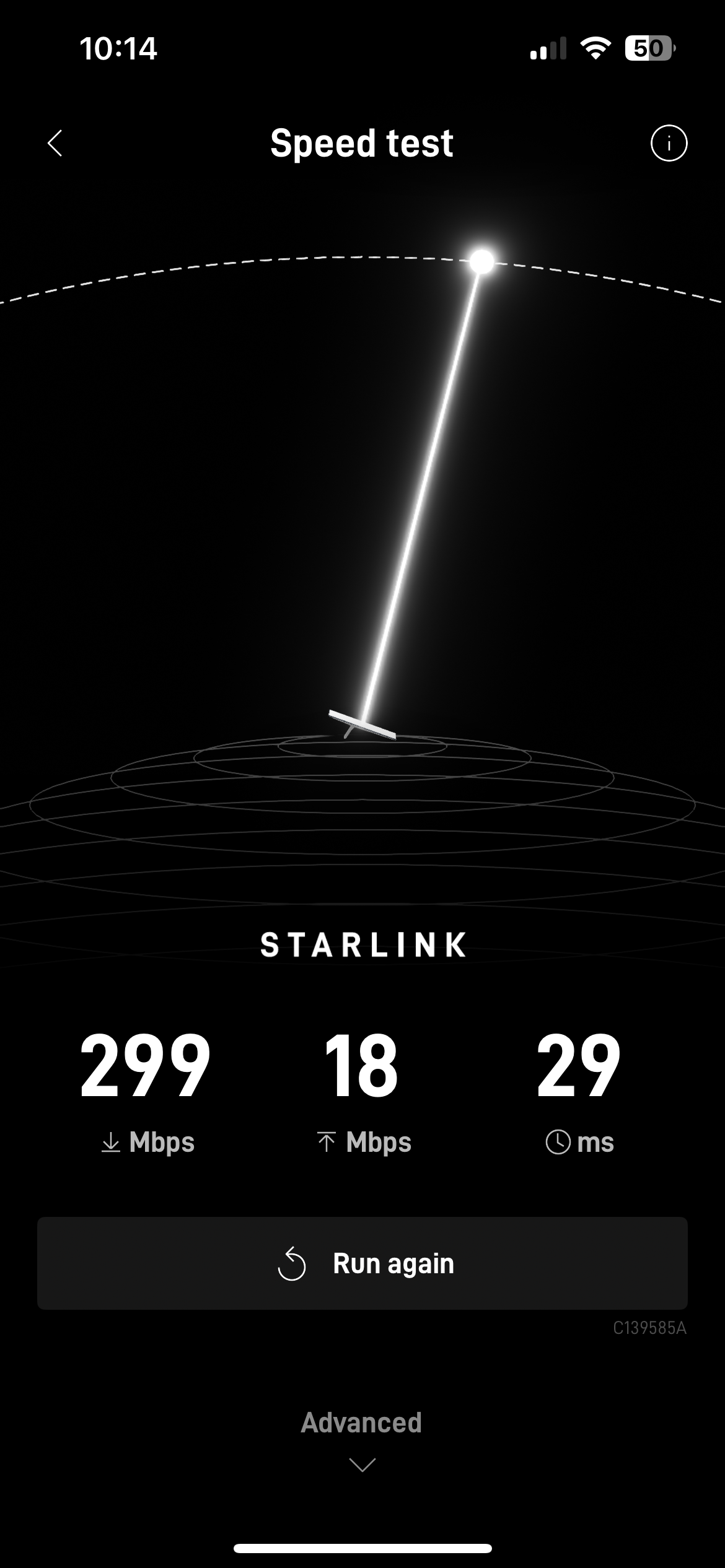
Example of internet speeds available from Starlink
Why Plug-and-Play or Cloud-Ready Cameras Are Essential
Configuring cameras to work over 4G/5G mobile or satellite connections comes with its own hurdles. Port forwarding, static IPs, or VPNs are often out of reach:
- Most mobile networks use carrier-grade NAT (CGNAT), making reliable inbound connections to a camera nearly impossible.
- Like most mobile data plans, Starlink currently doesn’t offer traditional static IPs.
- Workarounds like traffic re-routing or VPNs might offer a solution but the complexity and overall footprint for an off-grid camera deployment is getting high.
That’s where cloud-ready or plug-and-play IP cameras shine. These devices are built to securely connect to the cloud without requiring advanced networking configuration. Once they’re online, they stream video directly to the cloud platform, regardless of the underlying connection.
A Real-World Solution: Camcloud’s Serverless Platform
At Camcloud, we’ve built our platform to support truly off-grid video surveillance. Our serverless approach works with cloud-connected cameras that don’t need any local NVR or complex network configuration—just a connection to the internet.
We’ve recently tested two setups that demonstrate how straightforward this can be using mobile or satellite networks.
4G/5G Camera Setup with Milesight
In our first demo, we used a Milesight SP111 4G cellular camera, which includes a SIM card slot and built-in mobile connectivity (it’s also attached to an integrated solar panel and battery packs which have worked impressively, but that’s a topic for another post). After powering the camera and inserting a SIM card from a major mobile carrier, the camera automatically established a connection to the cellular network.

Milesight SP111 4G and Solar Camera
Once online the camera was easily and securely connected to the Camcloud platform using its built-in Camcloud integration —no static IP, port forwarding, or additional hardware required.
In our tests, we’ve been running 24×7 continuous recording to the cloud over 4G, with no problems. All video is recorded to the cloud, and the camera can be remotely managed through Camcloud’s web and mobile apps. This setup is ideal for job sites, temporary events, or any location where running cable or setting up a router isn’t practical.
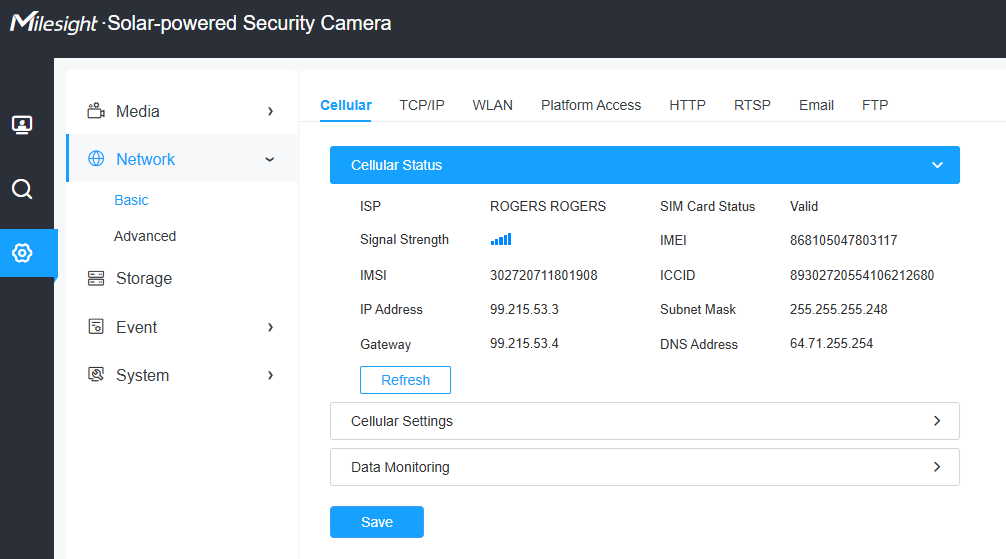
Milesight 4G Solar Camera
Starlink-Powered Remote Deployment
In a second setup, we tested a remote surveillance system using Starlink as the internet provider. Starlink’s satellite internet kit offers a fast, self-aligning dish and works virtually anywhere with a clear view of the sky.
We connected several IP cameras that have plug-and-play support with Camcloud to to the Starlink router using Ethernet, but you could just as easily use a WiFi IP Camera as well. From there, the camera automatically reached out to the Camcloud cloud service, again requiring no special networking configuration.
Within minutes, live video was streaming to the cloud and available for remote viewing and cloud recording.
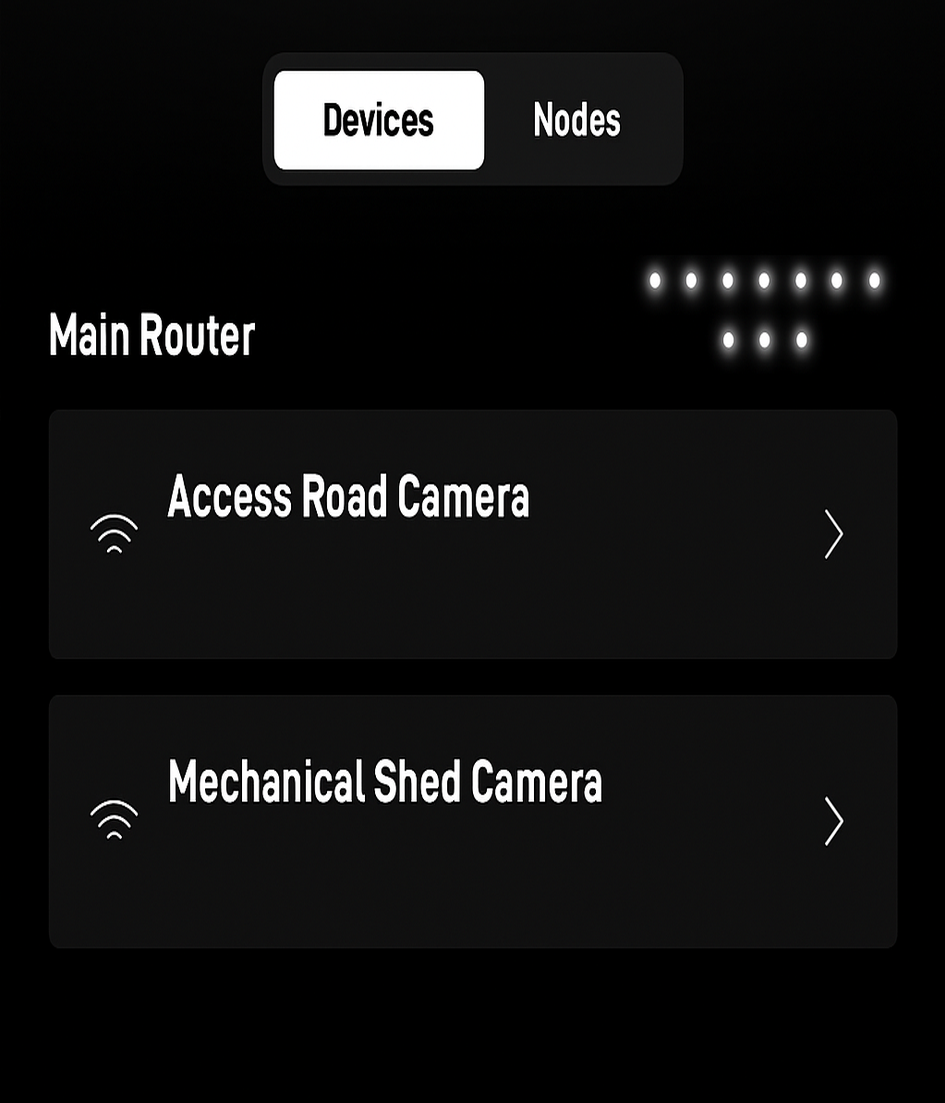
These tests show that even in isolated or infrastructure-poor environments, it’s possible to deploy reliable, fully cloud-managed video surveillance without the complexity of traditional systems.
If you’re looking to deploy surveillance in a remote or infrastructure-challenged location, a cloud-first, hardware-free approach is the most flexible and reliable path forward. Whether you’re monitoring a construction site, rural facility, or temporary work zone, Camcloud makes it easy to get up and running—without the complexity of traditional systems.
👉 Learn more about our off-grid surveillance solutions for construction sites here.

No Comments